 Hunter Gatherer 21C
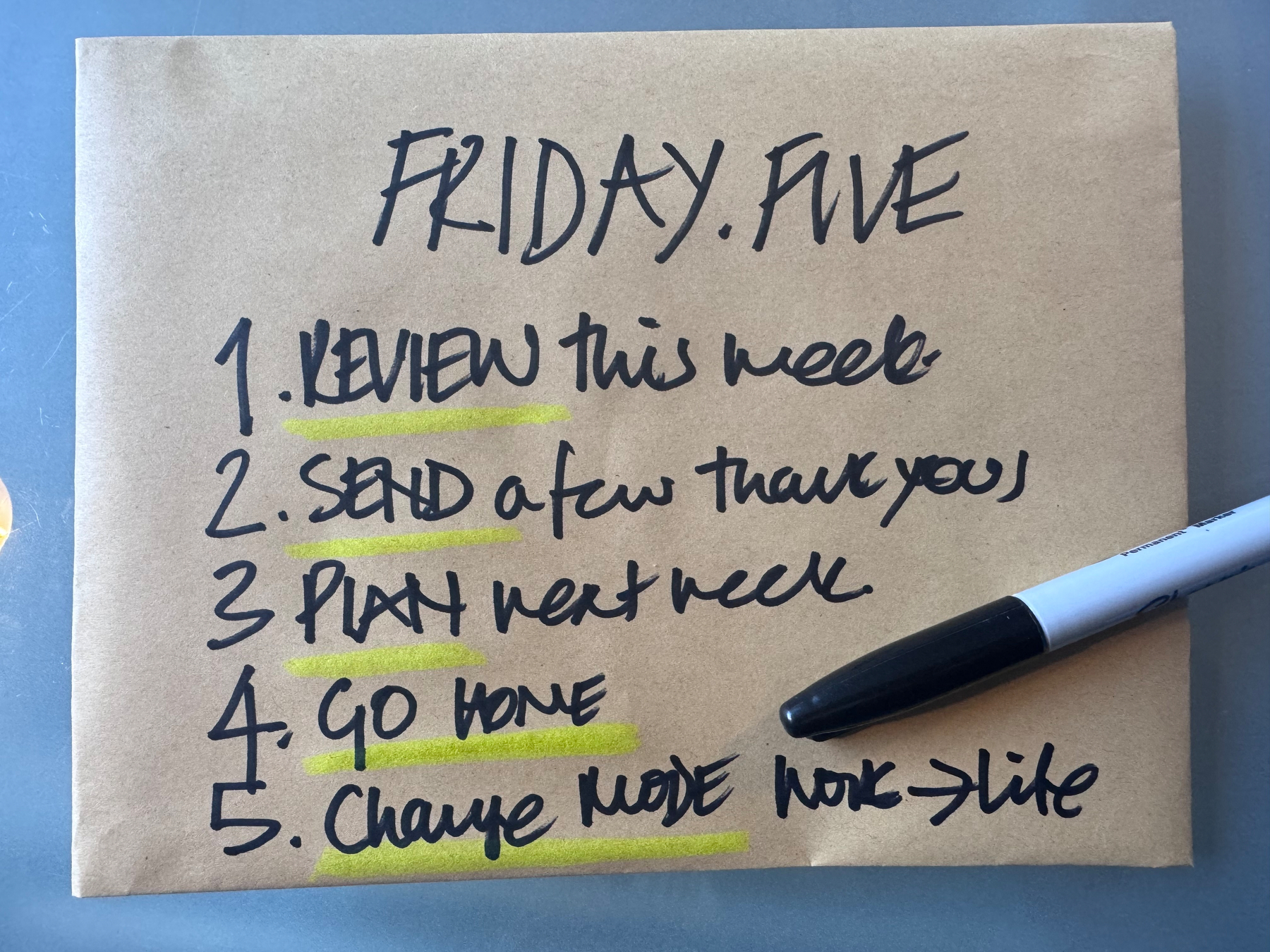
Old School, but it works. Like much ‘Old School’. The Agenda
Many meetings are madness; meetings without an agenda are chaos.
If you receive a meeting invitation without a goal and/or an agenda, here is a suggested reply: ‘Looking forward to it. Could you send the goal and agenda so I can prepare?’ Too often, we receive a calendar invite titled ‘Quick catch-up,’ ‘Touch base’, or ‘Sync,’ and we dutifully show up, not knowing what we are meant to discuss, decide, or achieve. Without that aim and agenda, it is not an effective use of your time, and thus, respectfully decline.
You, on the other hand, will behave differently: before any meeting you initiate, circulate a document that states: o the purpose: why are we meeting? o the desired outcome: what decision or clarity do we need by the end? o the items to cover: a small list of specific topics, with time distributed to each. o the pre-reading: anything people should review beforehand.
This takes five minutes to prepare (if it is not quick and easy to prepare then you are not ready to call a meeting!) and saves hours of meandering conversation. Be respectful of the recipients’ time, be clear, and succinct and prepare attachments with care.
Action: Only offer meetings with a goal and agenda. Only attend meetings with both. Respect the time of others; ask that others do the same of yours.
Once Upon a Time.
It was Friday evening, and we had gathered in the pub with the exhaustion that comes from spending a week trying to engage teenagers about things scientific such as the periodic table. I had not long graduated, and the plan was straightforward: a one-year transition programme from degree to chalkface. The course alternated between educational theory and increasingly long and intensive teaching practices; the Friday gathering had become our ritual debrief, where we shared tales of horror and, when fortune smiled, success.
That evening, one fellow student held her half-pint close with the stare of someone who had survived the week, but only just. She recounted how impossibly hard she was finding it, to hold her students' attention, how she felt she was pushing water uphill, how nothing seemed to land. But then her voice shifted. ‘I had one magical lesson though,’ she said, sitting up slightly. ‘I started telling them about when I was a researcher and we had a giant centrifuge in the lab.’ She explained that what had begun as a five-minute anecdote in her first class that morning-in order to fill the time before the bell-had evolved across the day. By her third set in the afternoon, the story had expanded to twenty minutes, embellished with details about the noise it made, the safety protocols, and what happened when someone forgot to balance the samples properly. The machine had transformed from a piece of laboratory equipment into a character, with personality, danger, and consequence.
She had become a storyteller.
TBC
The Tools of Excellence
Number 54: The Go Bag
A go bag-also called a bug-out bag or emergency kit-is a packed bag (back or cargo) containing everything you’d need to survive 72 hours if you had to leave home immediately: natural disaster, building evacuation, sudden displacement… You grab one bag and go.
What does it contain? Here is a suggested list for one person. • Water: four litres of water plus water purification tablets to extend the supply beyond what you can carry. • Food: 72 hours of non-perishable, ready-to-eat items such as energy bars, nuts, dried fruit, jerky, tinned food with ring-pull lids. Include a spoon. • Clothing: spare socks and a lightweight, waterproof jacket; a warm layer (fleece or thermal); a hat and gloves. Choose layers that work together and assume extremes of heat, cold and wet. • Light & Power: torch or headlamp (headlamp leaves hands free), spare batteries, charged power bank, phone charging cable. • First Aid: plasters, bandages, antiseptic wipes, painkillers, blister plasters, tweezers. • Tools: small multi-tool, duct tape, lighter AND waterproof matches, whistle, pen and small notebook. • Hygiene: wet wipes (multipurpose), toothbrush and small toothpaste, hand sanitiser, tissues, travel soap or biodegradable wipes. • Documents: photocopies (not originals) of ID/passport, emergency contact list, medical information (allergies, conditions, medications). • Cash: a small amount of cash in mixed denominations. • Shelter & Comfort: foil blanket, compact poncho, small tarp or survival bivvy bag. • Safety & Communication: small radio (wind-up preferred as no battery dependence), high-visibility tab or strap, basic dust masks, lighter, candle, and key phone numbers written on waterproof card.
Build your go bag once, check it twice yearly (replace expired food, update documents, refresh batteries). Store it accessibly-under the bed, in a hall cupboard, in the car boot-somewhere you can grab it in the dark or during chaos. Mine is in a cupboard near the main door.
This is not prepper paranoia, it’s preparedness. Natural disasters, fires, floods, and unexpected evacuations happen. Those of us in europe have discovered extensive fires and floods are now regular events. Having your go bag ready means you can leave at once with essentials secured, rather than panicking about what to grab while smoke alarms sound.
One bag. Three days of independence. Complete preparedness. That is security you can carry.
The other 69 Tools of Excellence are here.
In The Pipeline
Pierre Lambert 2 (working title) progresses nicely. Two in the non-fiction companion series are close to completion. Working on paper editions for all the publications as this is frequently requested especially for the novels.
Lucky Patrick
is heading to Greece and the islands. I have many happy memories of Athens and the islands. Read more here.
J F Roxburgh
the first headmaster of Stowe once said a well-rounded person is someone who is ‘acceptable at a dance and invaluable in a shipwreck’.
Free Reading For The Weekend
Long: Pierre Lambert, Detective. Short: Love, Life & Legacy. Three short stories.
Stop Press
Both books mentioned below are free for 72h thanks to the nice people at Kindle. Free. Worldwide. 72h.
On Writing
Writing as Excavation
E.L. Doctorow said that ‘writing a novel is like driving a car at night. You can see only as far as your headlights, but you can make the whole trip that way.’ This metaphor captures something essential about the creative process that many overlook: writing is not about executing a plan; it is about discovering what you are trying to say.
Most writers know this quietly but need permission to trust it. Stories are not built so much as uncovered. You do not start with a complete blueprint. You start with a situation, or a character, or a question, and you write to find out what happens.
For me, I have an idea which grows and develops until I feel I have a book (if not a book, then maybe a short story). I start to write. I write daily. I chase quantity and then edit for quality. Characters appear from nowhere.
This can feel terrifying to new writers who perhaps think they should know everything before they begin. They ask: how can I start if I don’t know where I’m going? The answer is: you start anyway, and the act of writing reveals the destination.
Go write.