In The Pipeline

A second set of short stories are imminent. They are ‘done’ but need intensive copy work now. One is on art forgery, one concerns The Ministry of Major Concerns, London and one is a day at Totally, Totally, Global Inc. I imagine release mid October.

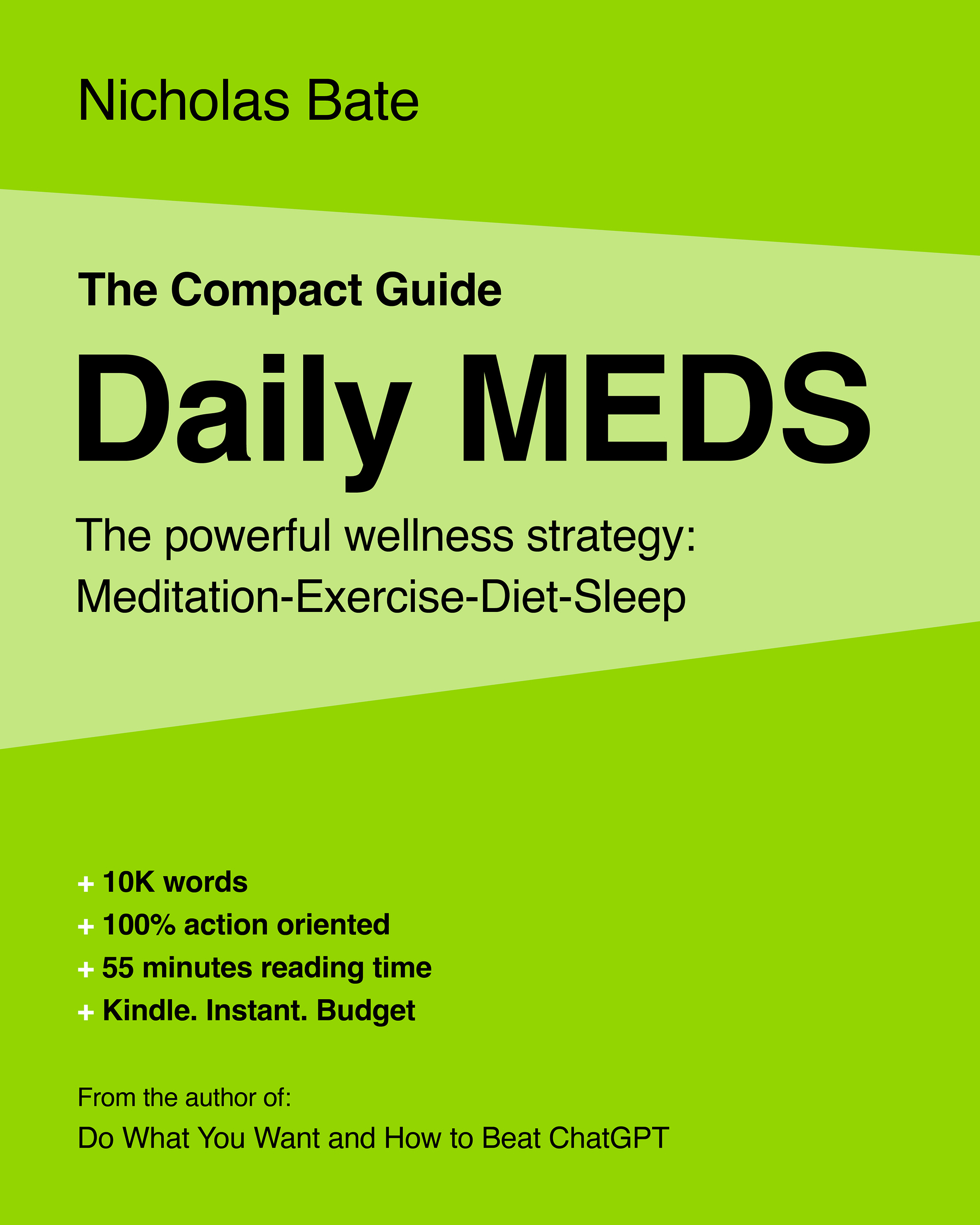
A new non-fiction work in the ‘Companion’ series is well underway for late October.

As always, thanks for supporting my output.

Stop and Think

Many countries insist you stop at the STOP sign; France for example has a three second rule and you will be fined if your car is observed to continue motion and is not truly stationary. The defence of ‘there was nothing coming, officer’ carries no weight of course.

Life demands of a similar guideline; regularly ‘stop and think’. What do you notice? What do you feel? What do you sense? Do it several times a day. Be it AI, a nagging ache or a looming presentation, being stationary for a while does no harm at all to anticipate the potential threats.

There’s intelligent and there’s smart.

Software is often very, very intelligent; think a spreadsheet or Claude helping you out with some P&L planning. But then there’s smart. That’s the cool ability that humans have to use their intelligence in a super optimised way; taking a different direction or a short-cut or something not just outside-the-box, it doesn’t even need a box.

AI at its best is marvellous but it’s not HS, Human Smart.

Be Human; Get Smart.

TBC

Reclaiming Human Skills for a Robot World

As AI takes on more analytical tasks, let’s not forget the immense value of our distinctly human capabilities in this AI-driven world:

1.Storytelling over bullets of data. While machines can generate reports, humans create narratives that give meaning to information. We weave context, emotion, and purpose into facts, helping others understand not just what happened, but why it matters.

2.Questions over answers. In a world where AI can provide instant answers, our value lies in asking better questions—the ones that challenge assumptions, reveal hidden possibilities, and open new avenues of exploration.

3.Relationship building over networking. A genuine human connection can’t be automated. The ability to build trust, navigate complex social dynamics, and inspire others through authentic leadership becomes increasingly precious.

  1. Creative problem-solving over process following. While AI excels at optimising existing processes, humans excel at reimagining them entirely. We envision solutions that don’t yet exist, combine ideas from disparate fields, and take creative risks that no risk-averse algorithm would attempt.

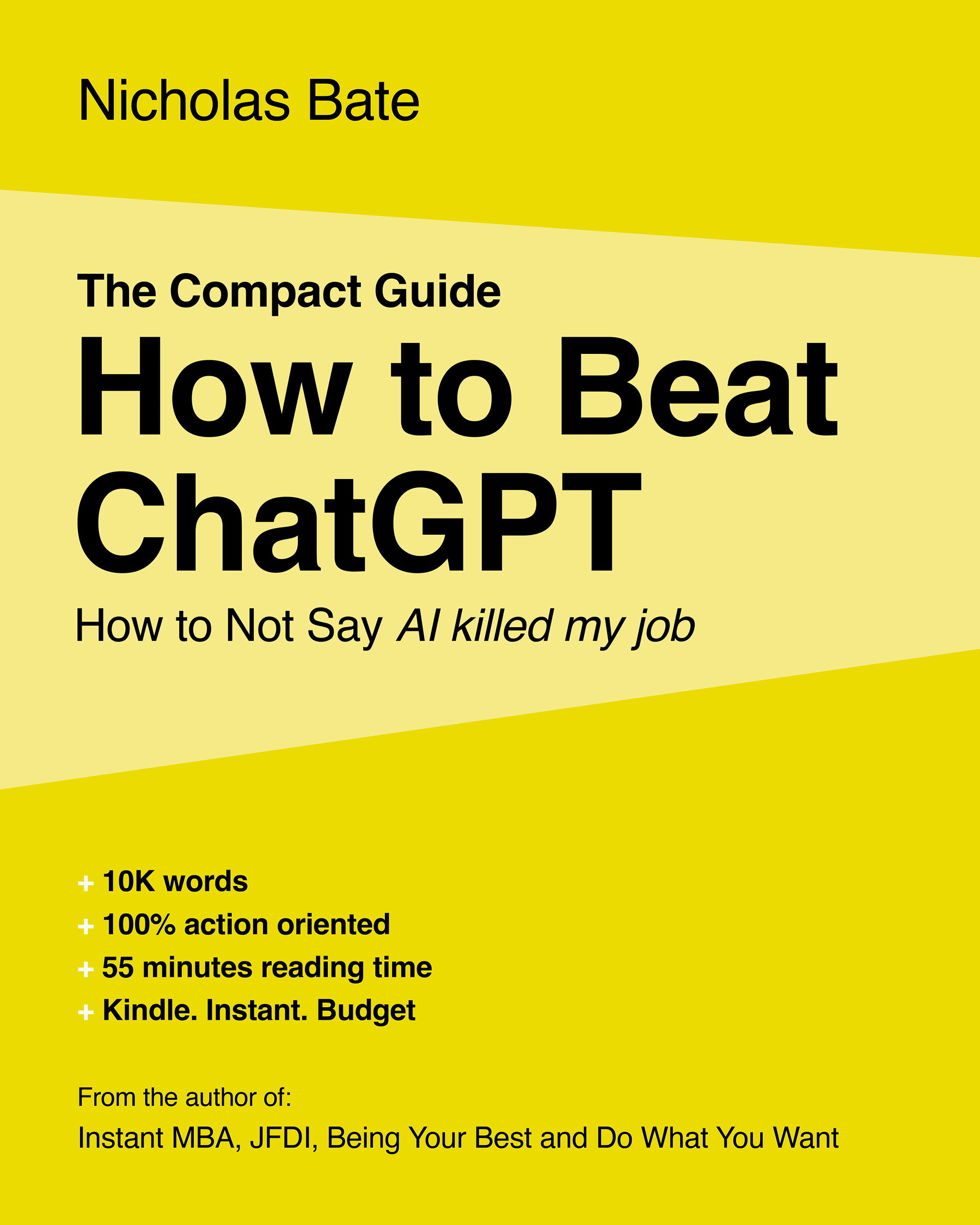
How to Beat Ai? How to defend your job? How to fight back in a Brave New World?

Be Human. Be Very Human And be your Best Human Protect your thinking from distractions, your creativity from negativity and your output from trivia.

The Irreplaceable Human Edge

What truly distinguishes us as humans is not our ability to process information or follow procedures, tasks that machines excel at. Our unique edge lies in the spaces between logic, in the intuitive leaps that bypass rational thinking, and in the emotional intelligence that reads the room. It’s our capacity to make connections that no algorithm would ever attempt. Reflect on your best moments: they are distinctly human. No one ever returns home and wishes they had spent more time scrolling through Instagram today.

The Courage of Imperfection

Being human means embracing what corporate culture often encourages us to conceal: our mistakes, our uncertainties, our need for connection. It means showing up with our whole selves, not just our professional personas. When we admit we don’t have all the answers, when we share a personal story that illuminates a business challenge, when we accept and learn from our own failures, we create the authentic moments that inspire trust and spark creativity. These moments of authenticity are not just personal, they are the fuel for innovation and the foundation of strong, trusting teams.

Long ago, a techie and I did joint presentations to large corporate clients about a networking solution we were pitching. We had great chemistry, and it became more stand-up than slick slide-turning. Clients loved it. And they bought our solutions. The most memorable presentations aren’t the ones with perfect slide transitions; they’re the ones where someone’s passion breaks through the template. The best innovations don’t emerge from focus groups and data analysis alone, but from someone brave enough to say, “What if we tried something completely different?” The strongest teams aren’t those that eliminate conflict, but those that navigate disagreement with curiosity and respect.

The key is to be alive-the definition of human-and reject the machine-like cloak which is often thrown upon us or for which we search in order to hide in a world gone crazy.

In a world of AI, Be Human.

TBC

Be Human

The relentless march toward optimisation has created a peculiar paradox. In boardrooms across the globe, humans shuffle through identical presentations filled with bullet points and buzzwords, their voices flattened into corporate speak, their individuality compressed into KPIs and metrics. We’ve become so obsessed with efficiency that we’ve accidentally automated ourselves, turning into pale imitations of the very machines we created. This relentless pursuit of efficiency has not only led to a loss of individuality but also a decline in the value of human qualities in the workplace.

The standard slide deck has become the great equaliser of human expression, a template that strips away personality, passion, and authentic voice in favour of uniform fonts and predetermined layouts. We speak in the sanitised language of “synergies” and “deliverables,” as if genuine human communication were somehow unprofessional. Meeting rooms fill with people who nod, their natural curiosity and creative dissent trained out of them by years of corporate conditioning.

But here’s the profound irony: as artificial intelligence grows more sophisticated, as robots handle more of our routine tasks, the very qualities we’ve been systematically suppressing are becoming our most valuable assets. The messy, unpredictable, gloriously inefficient aspects of being human aren’t obstacles to overcome—they’re our competitive advantage.

TBC

Man the Tool-Maker

One of my favourite and captivating counties in The UK is Wiltshire. It is rich in archaeological finds; if you haven’t already, explore the sacred triangle of Silbury Hill-Avebury Stone Circle-West Kennet Long Barrow.

As you ascend the path to West Kennet, study the soil in the adjacent fields: it’s stacked full of flints, each sharp and with a little effort can be made razor sharp. Imagine Early Man’s delight at a tool for weapons, for skinning and for creating shelter. Here, in these unremarkable-looking stones, early humans discovered their first great technological breakthrough. For man is a tool-maker and he’s created an endless succession of them since his arrival on planet earth.

Artificial Intelligence represents merely the latest link in this ancient chain. Despite the unprecedented hyperbole surrounding its emergence-far exceeding the quiet revolution of those first flint artisans-AI remains fundamentally what all human innovations have been: a tool. Like the flint blades of West Kennet, it demands skilled handling, proves only as capable as its wielder, and will displace human work only in those roles that were already narrow in scope, easily defined, and repetitive in nature.